There are three main mechanisms to implement an UVAR and we have named them “Measure Fields”. They are:
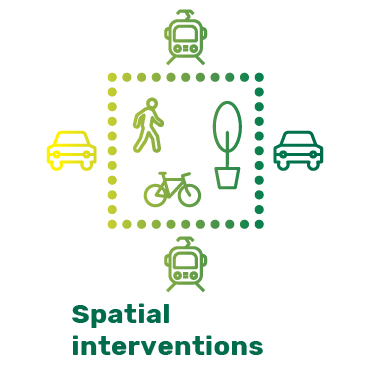 |
Spatial interventions |
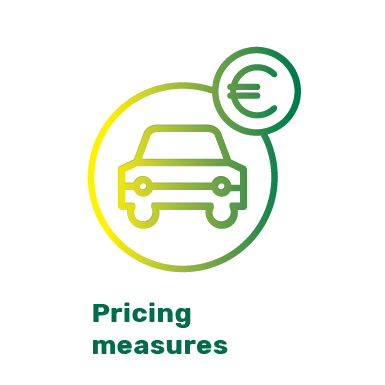 |
Pricing aspects |
 |
Within these Measure Fields, the different aspects are further split into Building Blocks.
As part of the ReVeAL toolkit, there are factsheets that explain each building block. These are linked to from each Building Block title in the following bullets
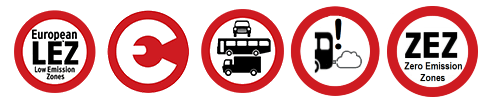
 Regulatory measures are those where there is a legal instrument that states who can and cannot enter an area.
They could often also be called 'bans', and include Zero Emission Zones, Low Emission Zones and Limited Traffic Zones.

Spatial interventions are where the road layout has been altered to favour more sustainable mobility and prevent vehicles from entering.
Examples of these are removing road and parking space taken for vehicles and using the space for sustainable mobility or amenities (bus lanes, logistics hubs, parklets, restaurants, and more).
Traffic filter:
Reallocating parking space:
Reallocating road space for pedestrians:
Reallocating road space for cycling:
Reallocating road space for public transport:
Pricing aspects are when the entry to an area or to the entirety of the city is given a price tag to encourage more sustainable transport.
Pricing aspects also include the (differential) levels of penalty fees to encourage (and enforce) compliance.
Road charges/tolls:
- Charge applied to a perimeter or an area (congestion charge)
- Charge applied to specific points
- Distance-based charge
- Time-based charge
- Permit charge
- Charge based on emission standards (pollution charge)
Parking charge: