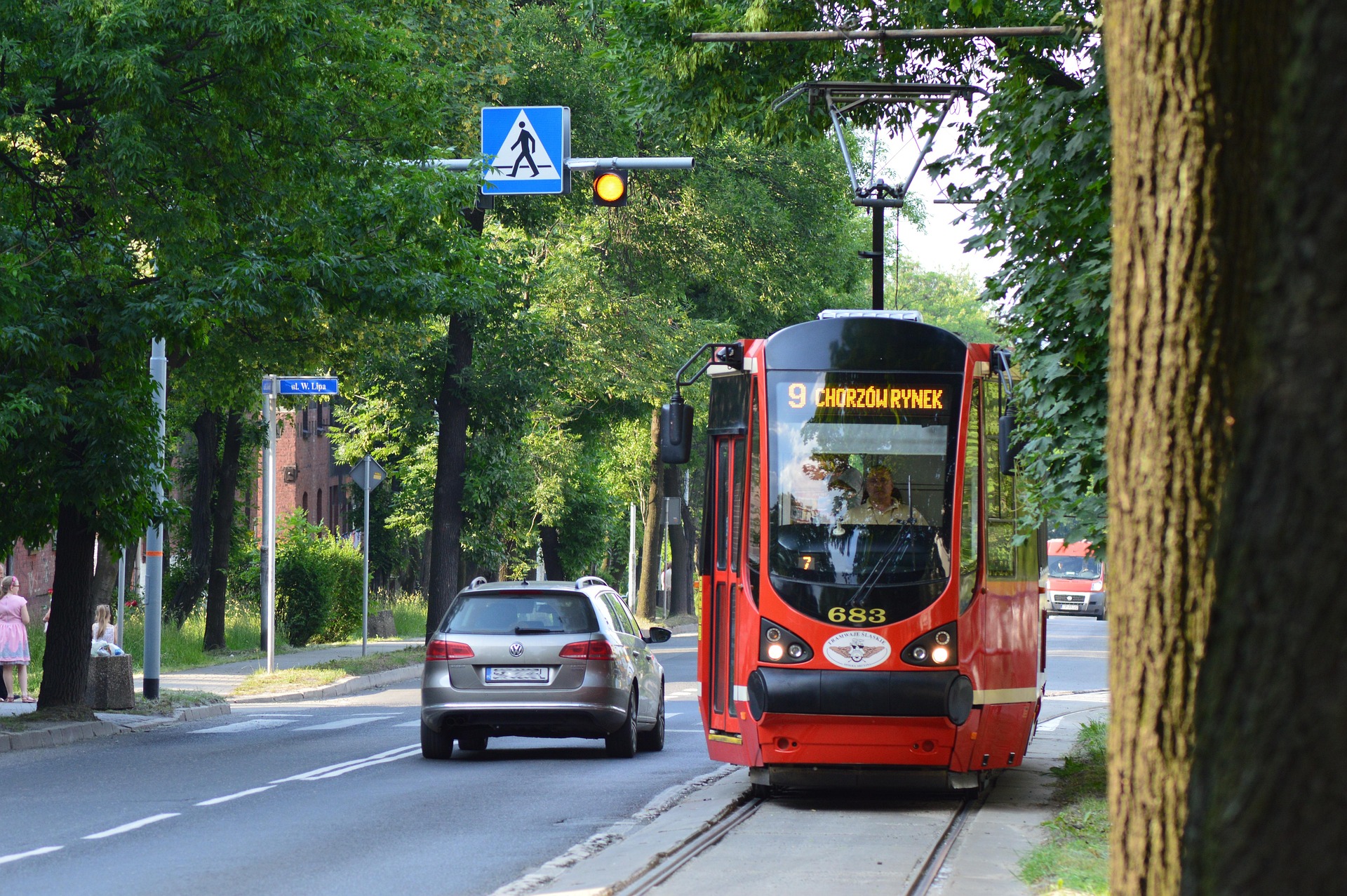
A low-emission zone (Strefa Czystego Transportu, SCT) will come into effect in downtown Katowice on 29 June 2026.

Urban Access Regulations in Europe
Urban Access Regulations in Europe
A low-emission zone (Strefa Czystego Transportu, SCT) will come into effect in downtown Katowice on 29 June 2026.
UVAR4US is a DUT Driving Urban Transitions project, that examines how Urban Vehicle Access Regulations (UVAR) can be used to support the 15-minute city concept (15mC), which in turn contribute to net-zero, liveable, multi-functional urban spaces.
Within the project, four cities, so-called Living Labs – Helsingborg (Sweden), Vitoria-Gasteiz (Spain), Ioannina and Kozani (Greece), will implement and validate various UVAR measures.
The project will provide:
The project is funded by DUT Driving Urban Transitions, together with the national funding agencies of the different partners in Sweden (RISE and Helsingborg), Germany (Rupprecht Consult and Sadler Consultants who run this www.urbanaccessregulations.eu website), Belgium (UGent), Italy (TRT), Greece (Living Prospects and CLUBE) and Spain (GAIA).
For regular updates see the UVAR4US LinkedIn page.
ReVeAL considers the implementation of UVAR measures a necessary part of a wider transition management challenge.
In view of this, “Cross-cutting Themes” are aspects that are common to all Urban Vehicle Access Regulations and that need to be comprehensively and co-ordinately considered when implementing them.
ReVeAL has grouped these into four topics:
 Supportive Mobility Measures
The mobility services that exist and are already planned in a city affect what UVARs can be developed, as well as whether they will be successful or not. Cities’ ongoing and future mobility plans and UVARs need to be considered as harmonised parts of one organism.
 User Needs and Public Acceptance
An UVAR may not be universally welcome, but it will only be successful when generally accepted and meeting the mobility needs of its city of application. Knowing its problems and users and involving stakeholders are all other additional aspects that can increase the scheme’s success.
 Governance and Financing
The administrative frameworks and mechanisms of a city (which include its decision-making context, legal and policy frameworks, and more), as well as its financial arrangements for funding UVAR measures and using the resulting revenue streams, influence the development of an UVAR.
 Ensuring Compliance
The choice of tools and methods to ensure that users can easily understand how to comply with an UVAR and that compliance is consistently enforced depends on many aspects, as does the type – technological or manual in nature – that is most appropriate for each city.
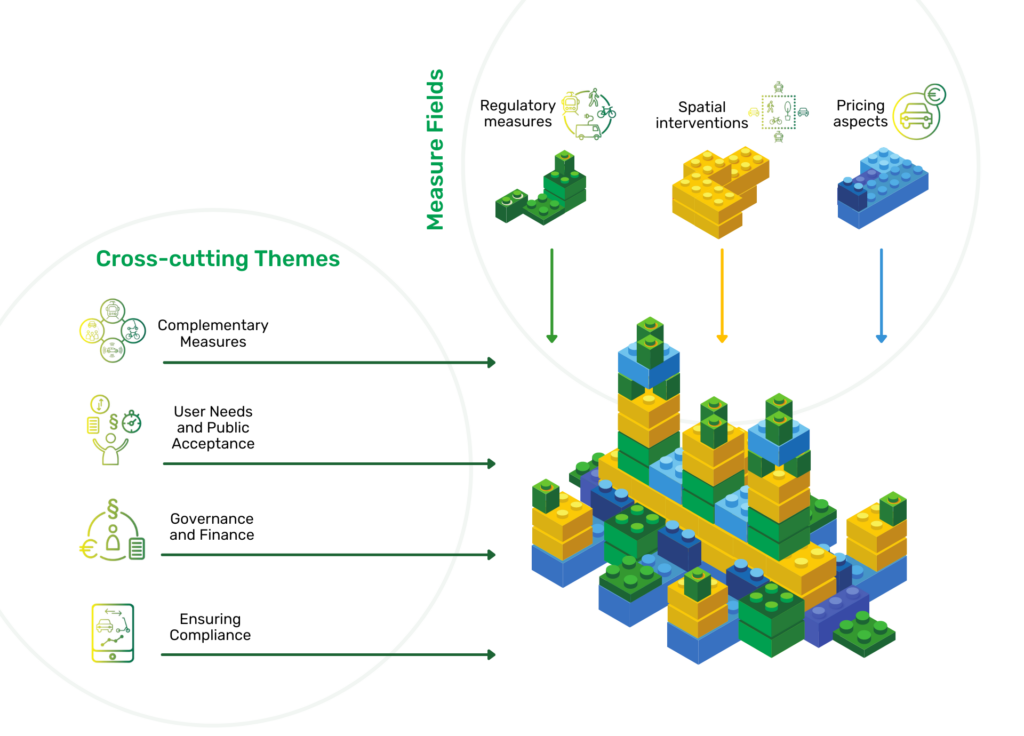
There are three main mechanisms to implement an UVAR and we have named them “Measure Fields”.
Within these Measure Fields, the different aspects are further split into Building Blocks as outlined below:

Regulation by emissions:
Regulation by vehicle type and dimensions:
Regulation by trip purpose:
Regulation by permit:

Traffic filter:
Reallocating parking space:
Reallocating road space for pedestrians:
Reallocating road space for cycling:
Reallocating road space for public transport:

Road charges/tolls:
Parking charge:
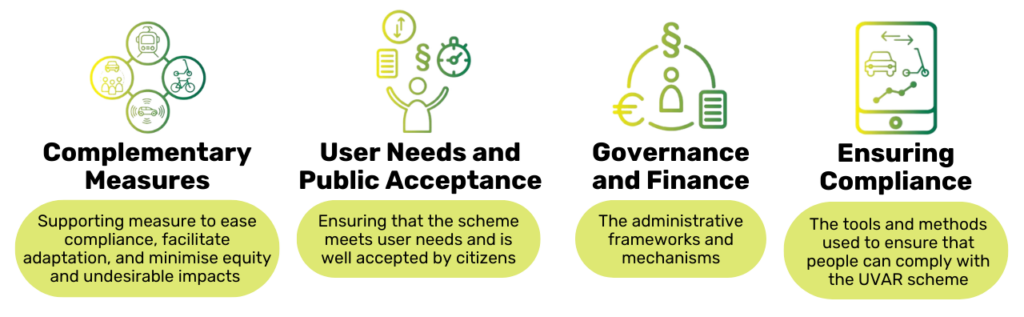
There are also aspects that are common to all UVARs. ReVeAL has grouped them into four topics, named “Cross-cutting Themes“: Supportive Mobility Measures, User Needs and Public Acceptance, Governance and Financing and Ensuring Compliance. More details on these cross-cutting themes can be also found in our Guidance page.

From 1 January 2028 an environmental sticker C will be required.

As of February 2026, the City of Milan has approved measures to postpone the stricter access restrictions for motorcycles and mopeds in Area B and Area C until October 1, 2027.
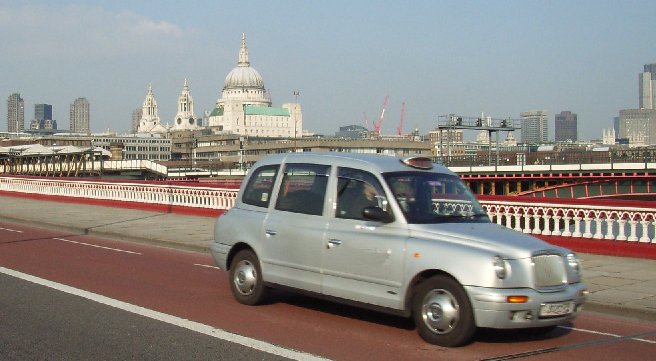
London meets NO2 air quality standards thanks to the ULEZ

Bergen's winter studded tyre scheme re-starts 1st November 2025





This website and data are copyrighted, but free of charge for private use. We have many data options see here.Click here to confirm your use is private or you have an arrangement with us. If not get in touch and Contact Us .