The first step is to find out if the city you wish to visit has a low emission zone, and what emissions standard it has. This can best be done by our City Search on the home or many other pages, our map or by Country. For more details on using our website see how to best use this site.

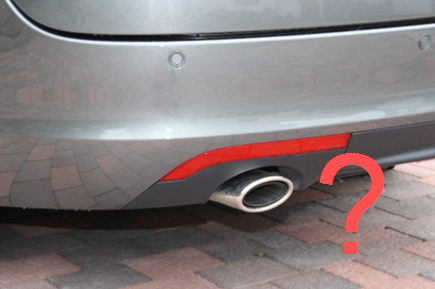
Vehicle exhaust
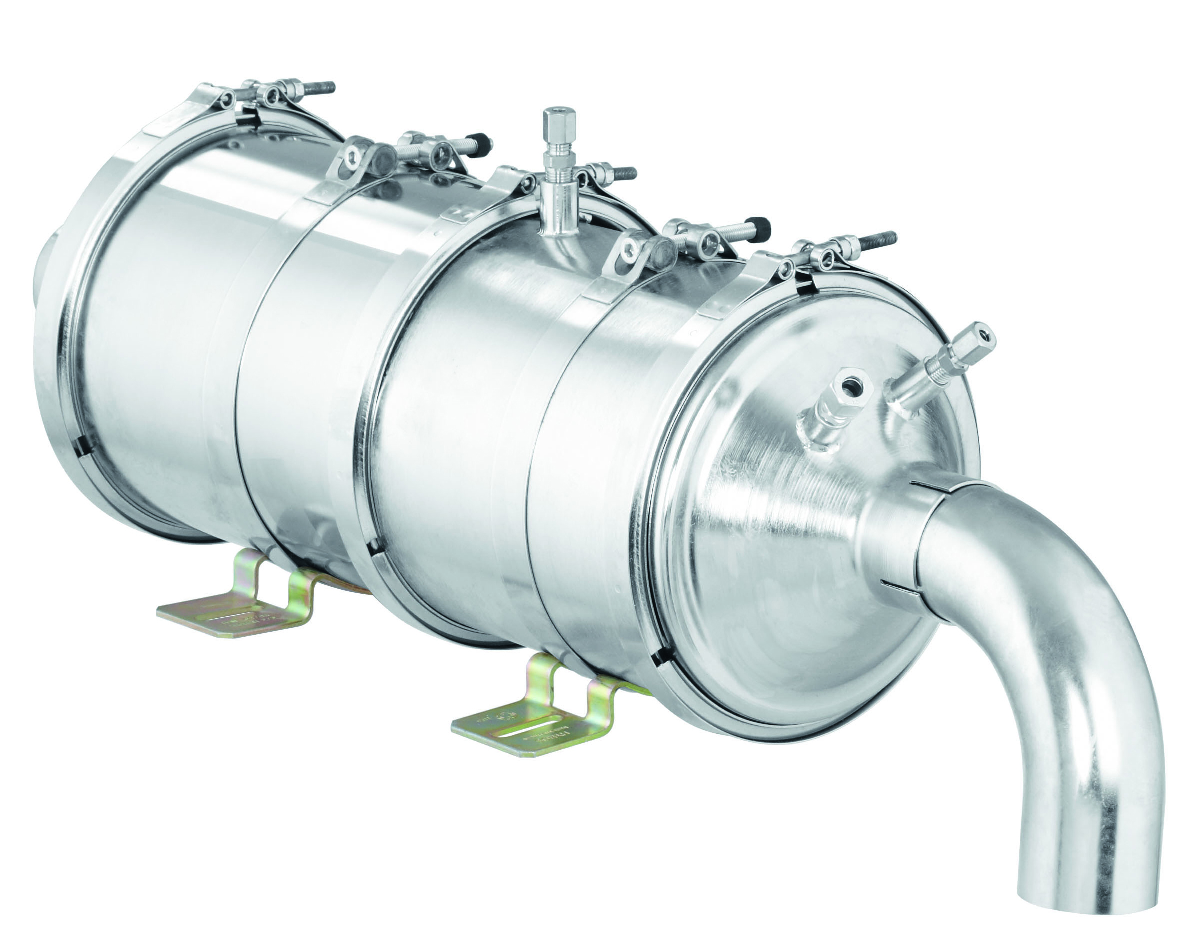
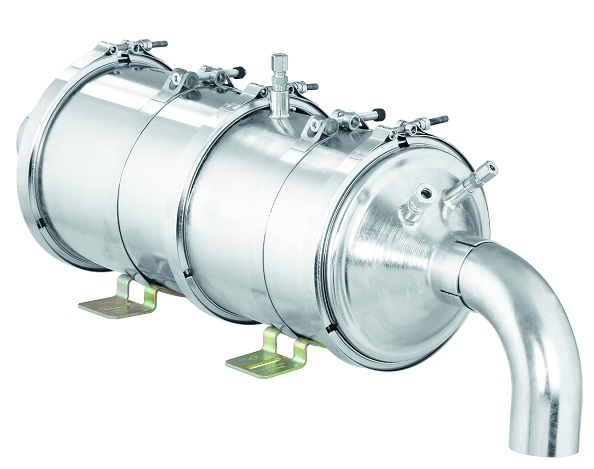
Diesel-particulate-filter-puritec
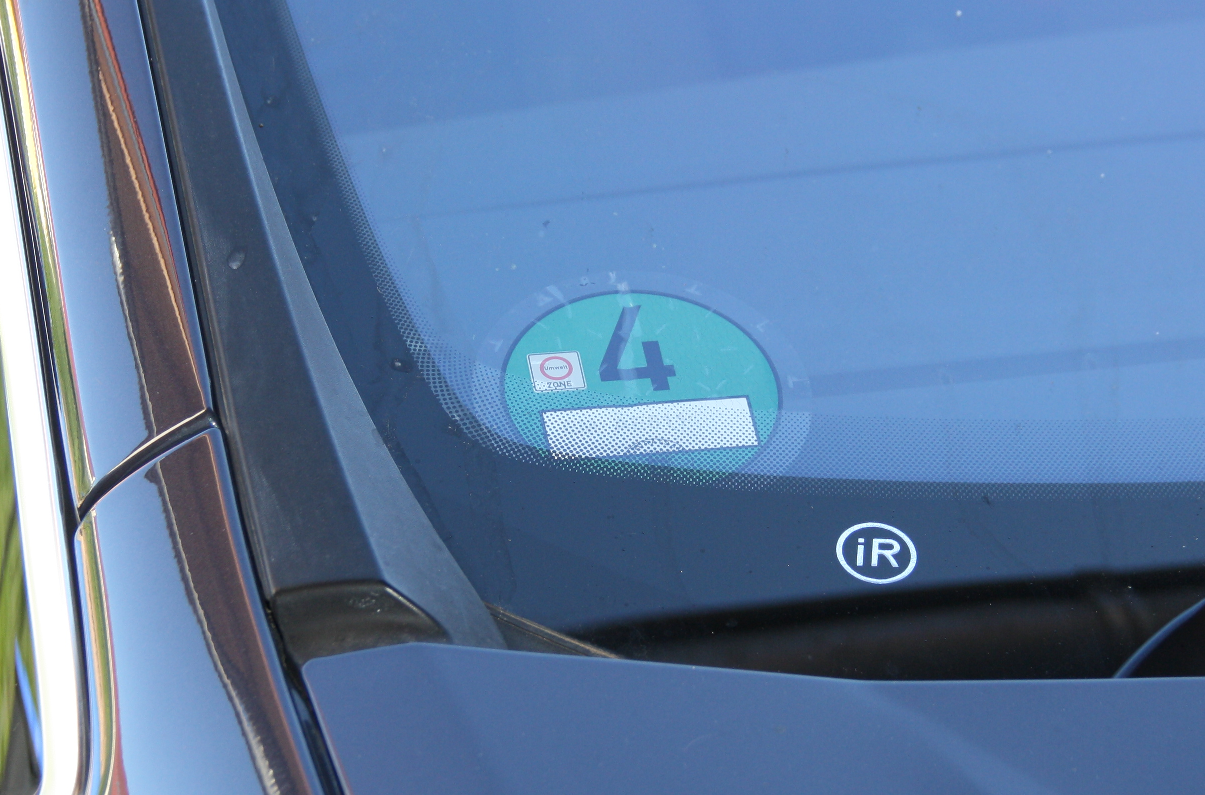
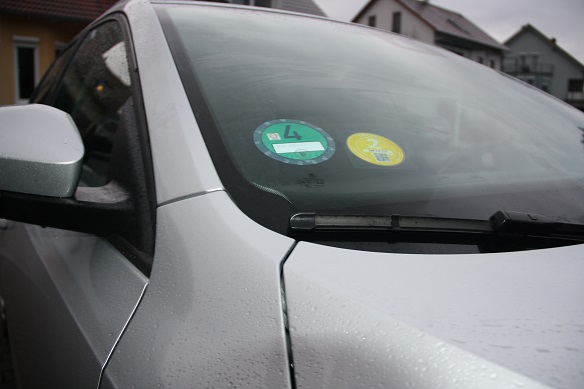
  Car with German low emission zone sticker

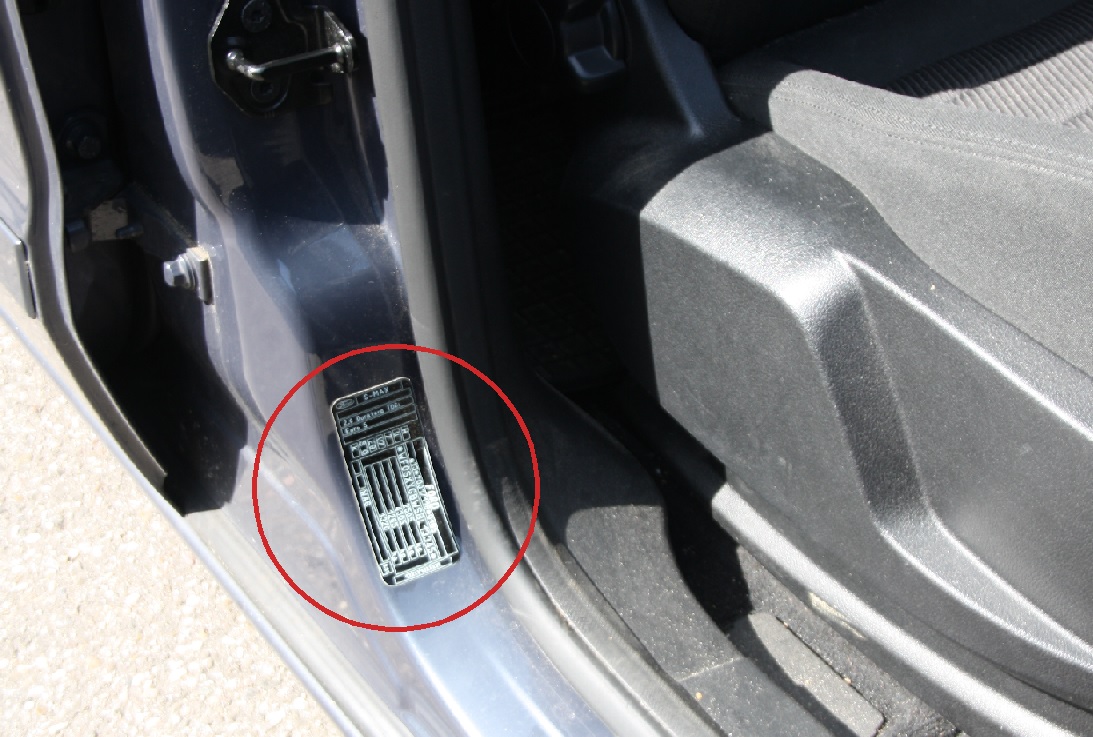
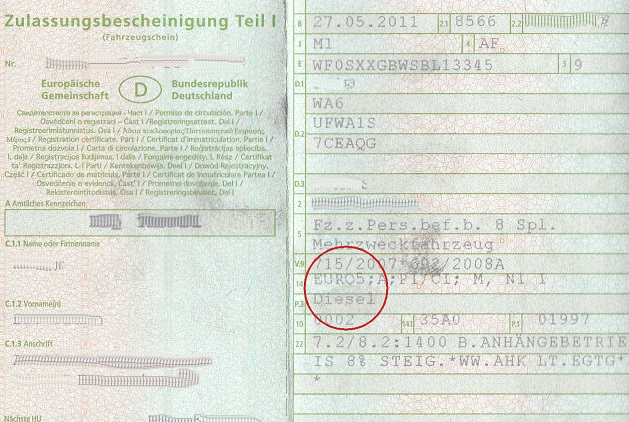
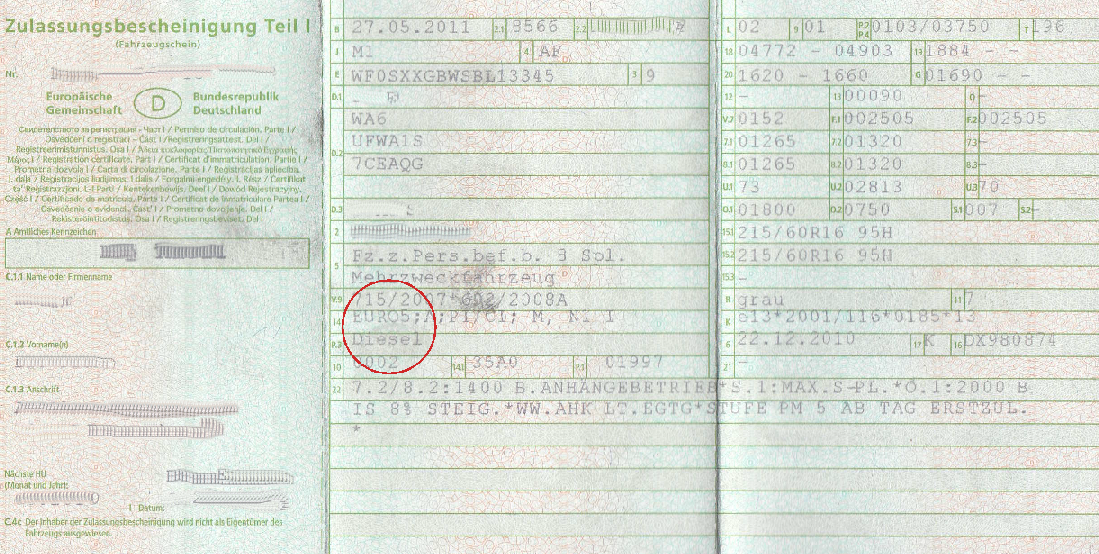
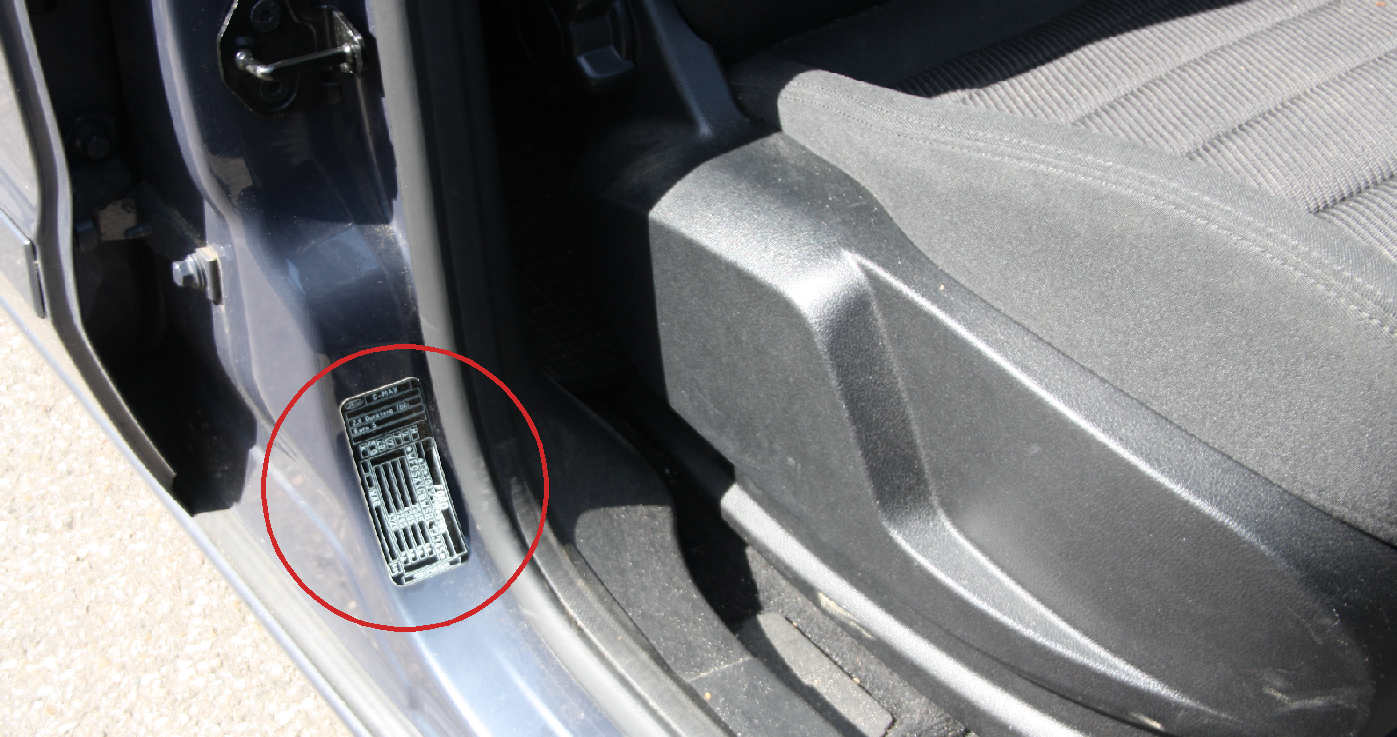
Then find out the emissions standard of the vehicle you wish to use.

For some low emission zones retrofitting with a diesel particulate filter or Selective Catalytic Reduction (SCR) is possible so that your vehicle meets the standard. 

Some low emission zones require you to register your vehicle, buy a sticker, pay a charge or otherwise register before you drive in the zone. You will need to proof of the emissions standard.

If you travel to many cities in Europe, check what emissions standards are required in the different LEZs, so that you choose a vehicle that will allow you to drive into the cities you need. If you travel often to different countries, and you want to get an overview of the different standards in different countries, then This email address is being protected from spambots. You need JavaScript enabled to view it..

If your vehicle does not meet the standards required, then you need to do one or more of the following:

Buy a newer vehicle
Retrofit
Reorganise your fleet or journey
Check for Exemptions


Buy a newer vehicle

Use a newer vehicle with an engine which meets the LEZ emissions standards, either a new vehicle, or a newer vehicle that meets the standards.

Vehicles in Europe since 1992 have been built to "Euro standards". These means that every 4-6 years, new vehicles are built with cleaner standards. The standards are currently between "pre-Euro" or "Euro 0" (meaning before the standards), and Euro standards 1 to 6. There are a number of other emissions standards, such as "EEV, Environmentally Enhanced Vehicle". The "Euro standards" are sometimes referred to as Euro I to VI for heavy duty vehicles, and Euro 1 to 5 for light duty vehicles. On this website we call them Euro 1 to 6 for both heavy and light duty vehicles to make it simpler.

If you have a choice, select the cleanest engine of the highest Euro standard, as this will also meet future LEZ standards. The Emissions Analytics EQUA Air Quality Index allows you to identify the vehicle with the lowest fuel use, CO2, or nitrogen oxides (NOx) emissions in actual road conditions.


Retrofit

For most LEZs and many vehicles, it is possible to fit equipment to reduce its emissions or modify the vehicle to reduce its emissions.

Possible modifications include:

The LEZ will usually require proof that a certified particulate filter has been fitted.

Diesel particulate filter vehicle engine


Picture sources, Puritec & Shutterstock

Reorganise your fleet or journey

If you operate a fleet of vehicles, you may be able to plan so that only vehicles that meet the LEZ emissions standards are used within the LEZs. If you are a small operator, then arrangements with other firms that have vehicles that comply can be an option.
Some cities may have distribution centres that you may be able to use to help avoid travelling into the LEZ area, also saving fuel, time and money.

If light duty vehicles are affected by the LEZ,  then you may be able to use public transport to reach your destination.
 

Exemptions

Some specialist vehicles may be exempt from the LEZ based on their use or type, for example registered disabled person vehicles, historic vehicles or circus vehicles. The vehicle will often be required to be registered with its local Registration Authority as this special vehicle type.
Some schemes allow entry of vehicles that do not meet the emissions standards if they pay a road toll and/or get a special permit under certain conditions.
Check with the individual LEZ city page on this website for more details.

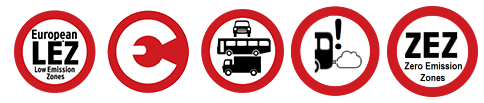
Low Emission Zones (LEZs) are areas where the most polluting vehicles are regulated. Usually this means that vehicles with higher emissions cannot enter the area. In some low emission zones the more polluting vehicles have to pay more if they enter the low emission zone.

There are increasing numbers of Zero Emission Zones in operation, preparation or planning. These are zones where only Zero Emission Vehicles are allowed in. This means Battery Electric or Hydrogen Fuel Cell Vehicles. For some plug-in hybrid vehicles may be allowed entry for an interim period, together with geofencing.

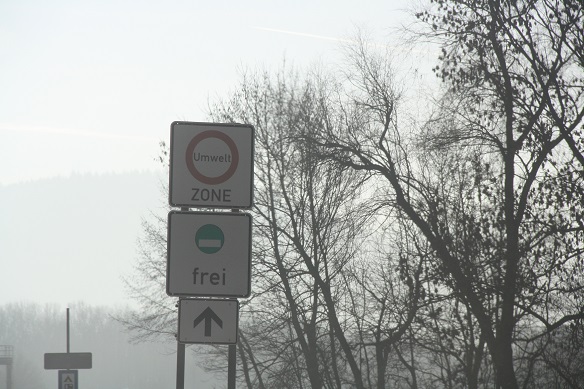
German Low Emission Zone Road Sign 
London fuel cell bus and taxi 
  French German Low Emission Zone Stickers

This page answers three key questions about Low Emission Zones 


What are Low Emission Zones?

Low Emission Zones (LEZs) are areas where the most polluting vehicles are regulated. Usually this means that vehicles with higher emissions cannot enter the area. In some low emission zones the more polluting vehicles have to pay more if they enter the low emission zone.
Low Emission Zones are also known as:

  • Environment Zones,
  • Umweltzonen (Germany),
  • Milieuzones (Netherlands),
  • ZCR, Zone à Circulation Restreinte (France)
  • Lage-emissiezone (Belgium)
  • Clean Air Zones (England)
  • Miljøzone (Denmark),
  • Miljözon (Sweden),
  • Lavutslippssone (Norway),
  • Alacsony Kibocsátási Övezet (Hungary),
  • ZTL ambiente (Italy).

Low Emission Zones are often the most effective measure that towns and cities can take to improve air pollution. Low emission zones reduce emissions of fine particles, nitrogen dioxide and (indirectly) ozone. These are the three main air pollutants of concern in Europe.
Fine particulates are also known as PM10 (particulate matter less than 10 micrometre in diameter) or PM2.5 (particulate matter less than 5 micrometre in diameter). A micrometre (μm) is a millionth of a metre (A human hair is about 90 µm in diameter). These fine particulates enter our bodies through its defences and cause damage to our hearts and lungs.

Vehicle emissions are classified in Europe by the "Euro standards". In some LEZs fitting a diesel particulate filter can allow a vehicle access to a LEZ.

Before you travel into a low emission zone, you first need to find out if your vehicle is affected.

  • Most low emission zones affect buses and coaches
  • Most low emission zones affect heavy duty goods vehicles (usually over 3.5 tonnes Gross Vehicle Weight (GVW))
  • Some LEZs also affect
    • vans, minibuses, camper vans
    • cars and
    • motorcycles

Find out which vehicles are affected in the city you wish to enter through our city search (above, in the top part of this page, under the menus).

Next you need to find out the emissions standards of your vehicle. Then check if this emissions standard is allowed into the zone.

Most LEZs operate 24 hours a day, 365 days a year. The largest exception to this is some of the Italian LEZs which are not in operation permanently. However, this number is reducing.


Why Low Emission Zones?

LEZs are implemented in areas where air pollution levels are dangerous to health. LEZs improve the air quality and make it safer to breathe.

Air pollution can lead to poor health and to death. It has huge costs, in both health and money:

  • Air pollution is responsible for 310 000 premature deaths in Europe each yeari.
  • Air pollution causes more premature deaths than road accidents.
  • The human health damage from air pollution is estimated to cost the European economy between €427 and €790 billion per yeariii.

Air pollution most affects the very young and the old and those with heart and lung diseases. Heart and lung diseases are both common causes of death in Europe.  Air pollution also triggers health problems like asthma attacks and increases hospital admissions and days off sick.

Diesel emissions have been classified as carcinogenic (causing cancer) by the World Health Organisation, which means that reducing diesel emissions is especially important for health. You can find out more details on these issues from the World Health Organisation air quality pages.

We can also consider the impact of air pollution on life expectancy [how long people can expect, on average, to live].

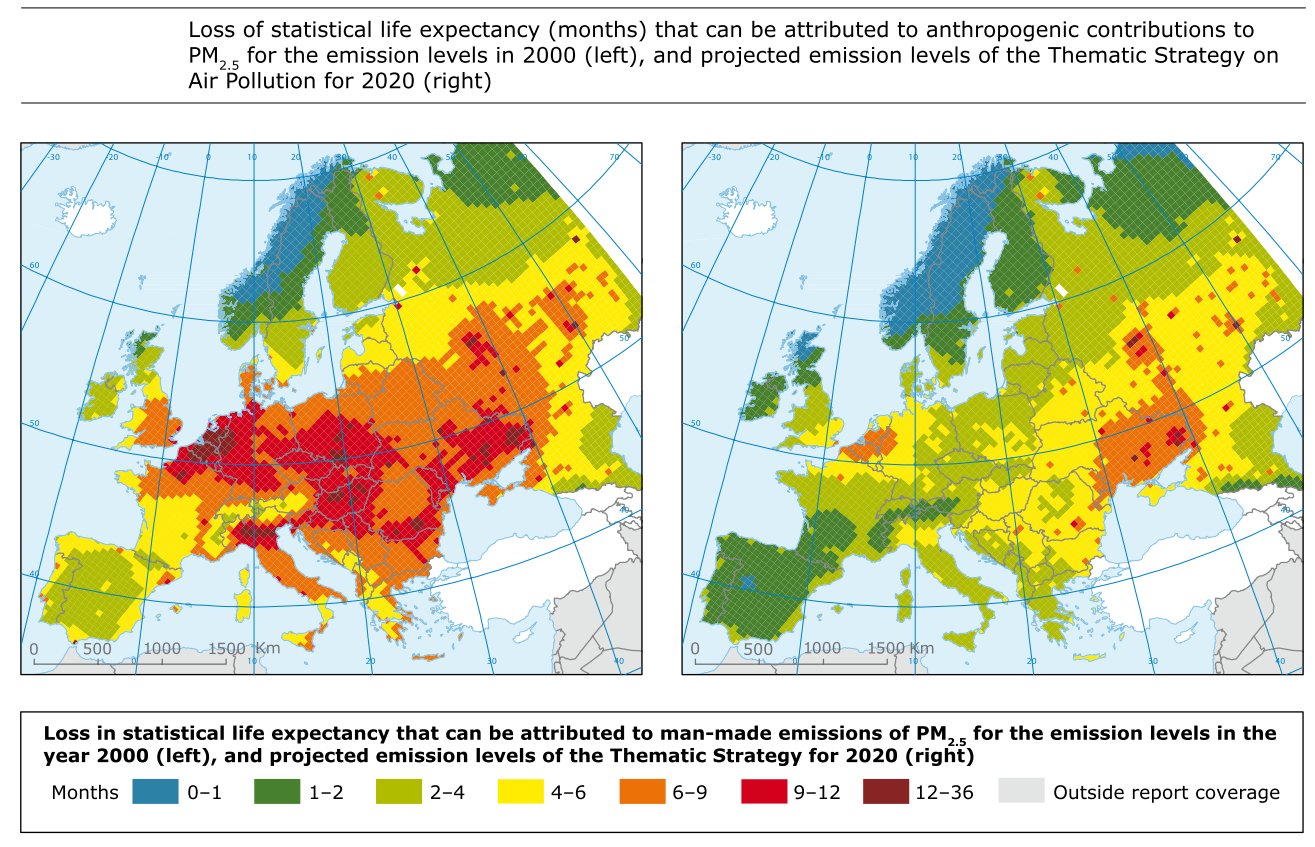
The following map left hand map shows an estimate of how many months life expectancy was reduced by man-made fine particles across Europe in 2000. The right hand map shows the months estimated when the many measures for air pollution have been implemented, in 2020iv. This shows the improvement that can be achieved with different air quality measures, for example cleaner Euro standards and Low Emission Zones.

lives lost from man made PM2.5 in Europe in 2000 and 2020

© European Environment Agency (EEA)

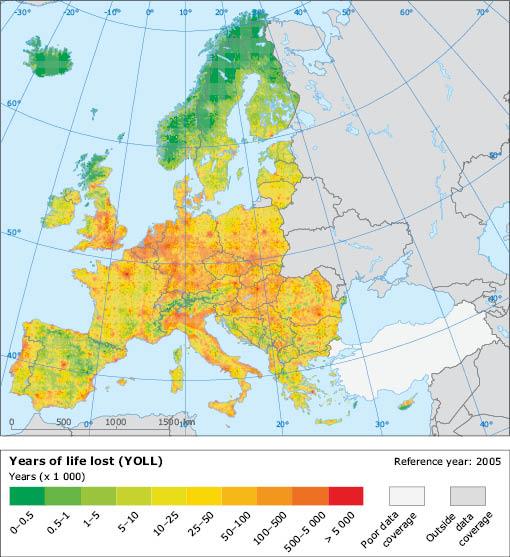
The third map below shows the estimated years of life lost (YOLL) in 2005 attributable to long-term PM2.5 exposurev. This shows slightly different things, but gives a guide to the improvements from the year 2000 above.

Estimated years life lost from long term PM2.5 exposure in Europe

© European Environment Agency (EEA)

Because of this danger to health, many countries around the world, as well as the European Union (EU), have set air quality standards. These usually include concentration limits to be met by set dates. It is in order to help meet these EU Air Quality Standards that low emission zones are being implemented.

There are many other measures that cities, countries and the European Union are taking to improve air quality in Europe. Traffic is one of the main pollution sources in towns and cities. Low Emission Zones are one of the key ways cities can reduce emissions from road traffic.


Why Zero Emission Zones?

Zero emission zones (ZEZ) are implemented for two main reasons; reducing local pollution and reducing climate emissions. They can also contribute to a nice quality of life within, and to a certain extent also outside, the zone. Where there is significant amounts of renewable energy available, electric or fuel cell vehicles can use less energy than most conventional vehicles. This is particularly for heavily used urban vehicles (such as delivery vehicles), where any increased resources required for the zero emission vehicle are more quickly compensated for. Zero emission vehicles are also quieter and have no local pollutants.

There are two main ways of implementing a ZEZ, either removing the traffic, or removing the vehicle's internal combustion engine (petrol, diesel, gas engine). Often it is a combination of both, trying to reduce vehicle traffic, and those vehicles that are allowed entry need to be zero emission vehicles (ZEVs). A pedestrian zone where the vehicles allowed in are zero emission would be one type of ZEZ. Another might be a low emission zone having the standards tightened to become a zero emission zone.

Some ZEZs, for example in the Netherlands, are ZEZ-logistics, where the delivery vehicles need to be zero emissions. This focuses the requirements on the heavily used urban vehicles.


What are Emergency Smog Schemes?

In some cities, when high pollution is expected, or after a certain number of days of high pollution, there are restrictions on vehicle usage, often combined with restrictions on solid fuel burning (eg wood or coal fires).

We have information on most of these schemes on our city pages. Information on whether the scheme is in place or not can be found on the links from our city pages, also in the local radio, newspapers and city websites.

Well known schemes include the Stuttgart Feinstaub Alarm (now no longer in operation) or the city and regional schemes in France and northern Italy.


Further Information on Air Quality

Useful sources of further information on air quality include:

The World Health Organisation

The European Environment Agency

European Commission Air Quality page


Impacts of urban road charging have been looked at for a higher proportion of schemes than for other types of scheme. This is maybe because road tolling is often a more controversial measure. The results for a number of cities are given below.


Impact of Milan's Area C from the start to 2015 
Impact London Congestion Charge 
Impact Gothenburg city road toll congestion tax

Impacts of the following cities can be found below.

London  
Milan   
Stockholm
Gothenburg

London

The London road tolling scheme has been very effective. Before the introduction of the Central London Congestion Charge there was significant traffic congestion in central London. Over half of the time spent by vehicles in central London during the daytime, the vehicles were either stopped in traffic or travelling less than 10km/h. This is about the same speed as in the days of horse and cart!

Those that needed to drive in the area to deliver goods had difficulty to access the area, and required longer or more vehicles and drivers than they do now. This congestion was very expensive for those needing to drive in the central London.

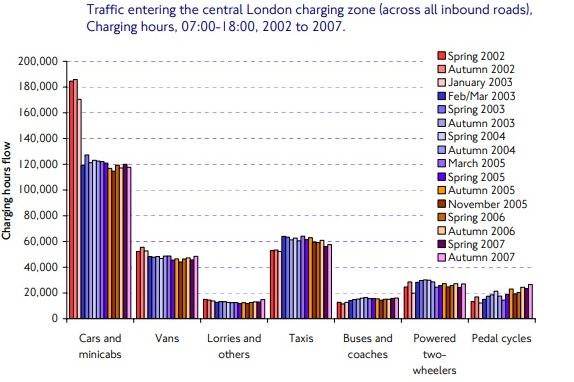
For example the impacts of the Central London Congestion Scheme include:

  • Congestion reduced by 30%, and the volume of traffic reduced by 15%.
  • The proportion of time that drivers spend stationary or moving slowly in queues reduced by up to one-third. This means that journey times are not only shorter, but also more reliable and more predictable – particularly for buses.
  • Traffic entering the zone was reduced by 18%, traffic circulating the zone was reduced by 15%.
  • Bus usage was increased by 38%, with 23% more public transport provided, due to there being more space on the roads.
  • Surveys of Londoners ‘on-street’ suggest that beneficial effects on environmental quality are being recognised
  • The reduction in traffic and its smoother operation reduced traffic emissions of nitrogen oxides (NOx) and Particulate Matter (PM10) by 12% in the zone. The impact on the ring road were less than plus/minus 2%
  • CO2 emissions were reduced by 19%, fuel by 20%
  • Traffic on the ring road surrounding the charging area (where traffic is not charged) showed small reductions in congestion, reflecting better operational management, despite slightly higher traffic flows caused by the charging scheme.
  • No significant negative impact was identified on business and economy.

The impact can be seen graphically below.

Impact London Congestion Charge


Milan

Milan has had three variations of its low emission zone. One is the regional LEZ (Milano Province), and the other two are the combined LEZ and Congestion Charge, first called Ecopass and then Area C.
With the Ecopass vehicles payed according to their emissions, together with the regional LEZ that did not allow the more polluted vehicles to access during the winter. The Area C charges a flat rate for vehicles, but does not allow diesel vehicles to go into the city with a lower Euro standard than Euro 3, or petrol Euro 0.
 

The impacts of the Area C have been

  • Reduction of incoming  traffic of just over 30%
  • During hours of Area C operation, the increase of commercial speed of public transport in the area is 5.7%  for buses and 4.7%  for trams.
  • No evidence the of deterioration in the speed of public  transport  outside the area
  • Impact on air quality emissions:
    • PM10 exhaust                   -19%;
    • PM10  total                        -18%;
    • NH3, Ammonia                    -31%;
    • NOx Nitrogen oxides         -10%;
    • CO2 Carbon dioxide           -22%
  • Inside Area C compared to external area the following results:
    • Concentrations of Black Carbon (BC) from -28% to -43%;
    • Content of BC in PM10 (ratio BC/PM10) from -16% to -46%;
    • Content of BC in PM2.5 (ratio BC/PM2.5) from -22% to -46%.
  • Inside Area C compared to external area the following results:
    • Concentrations of Black Carbon (BC) from -28% to -43%;
    • Content of BC in PM10 (ratio BC/PM10) from -16% to -46%;
    • Content of BC in PM2.5 (ratio BC/PM2.5) from -22% to -46%.


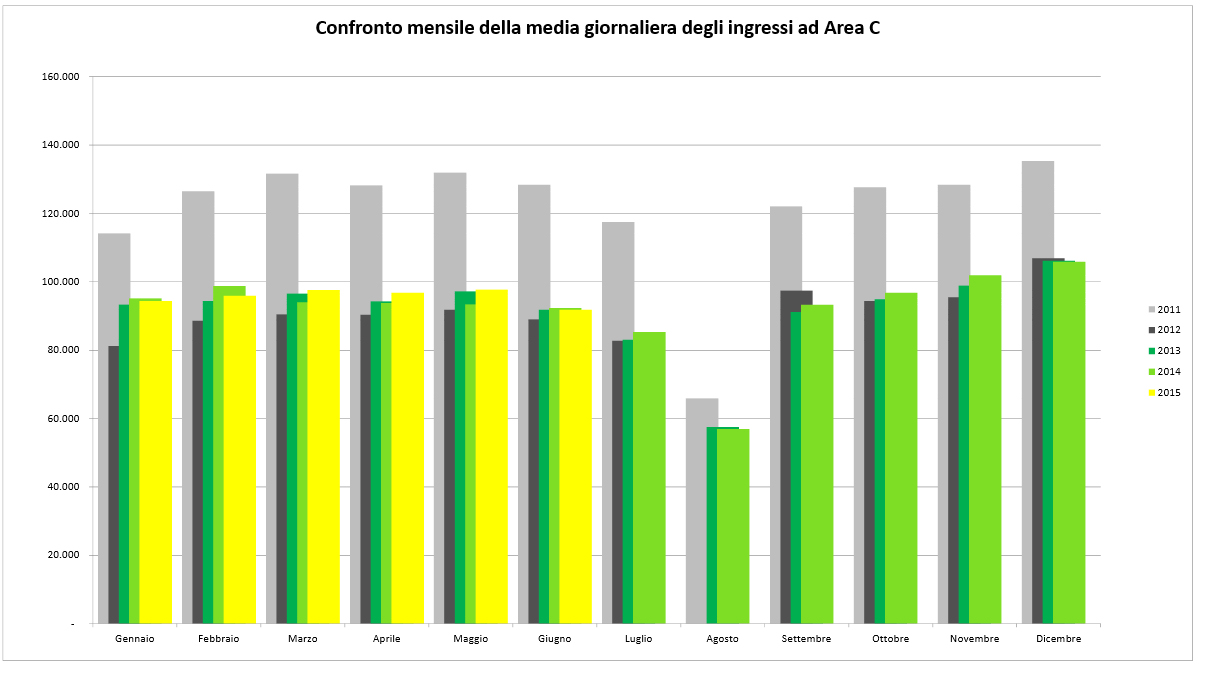
The Area C traffic data from 2015 can be seen in this graph published by the Milan City Authority. The months of the year are shown on the bottom legend, traffic on the left hand side. Click on the graph for a larger version.

Impact of Milan's Area C from the start to 2015

The Area C, designed to reduce traffic, has achieved its goal, leading to a reduction of 41000 entries per day into the Area C area and has also allowed the City Administration to reinvest into sustainable mobility. Over €13 million, net of the costs of running the service (running costs €7,100,000), was allocated to the expansion of subways, trams and buses and the implementation of the second phase of bike sharing in Milan (BikeMi).

€10 million has been used to improve public transport. 15 surface lines could be supercharged throughout the city, including trams and buses. Journeys were increased to more than 250 journeys per day, and the frequency of all subways (to 32 per day), extended during rush hour (extended to 10 a.m. instead of 9am). Moreover, an additional €3 million were used for BikeMi, and there are were 3300 bikes in circulation in 2012.

In addition, between 2012 and 2015: almost €4 million was used for interchange parking in Comasina, €3 million for 30 kph zones and up to €20 million to build and redevelop cycle lanes and cycle paths.

From its start to 2012 the Area C has raised over €20,300,000. Of the payments, 48% were paid for by paper permits and pay and display machines, 30.4% by Telepass, 12.5% by Pin enabled on www.areac.it, to 8.5% from activations of Rid (possible until September 2012) and 0.6% by ATMs.

The previous Ecopass improved air quality concentrations by:
– PM10 annual average 4%, exceedences 13%
• The Ecopass reduced emissions from traffic (as well as traffic flow)
– PM10 19%, NOx 11%, CO2 9%
 
• During Area C operation 7:30-19:30 traffic emissions reduced by
– PM10 18%, NOx 10%, CO2 22%
 
Because the Milan schemes are also a congestion charge, they also reduce the number of vehicles travelling into the city, unlike most other LEZs, which do not change the number of vehicles entering the zone. This means that they also reduce emissions of CO2, which the other LEZs generally do not.
 
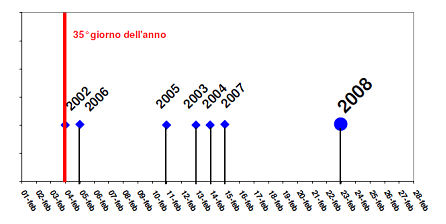
Before the Ecopass, the 35th day of the year was also the 35th day of PM10 exceedence in Milan. After the Ecopass this was pushed that back to the end of February - see the graph below.
Graph with the improvements from the Milan Ecopass on PM10 exceedences
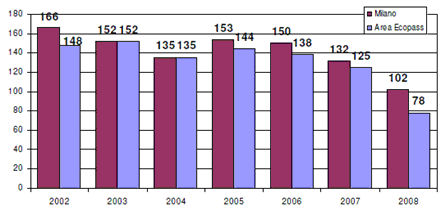
The impact on number of days exceeding the PM10 Limit Value of 50μg/m3 in the Ecopass area can be seen in the graph below (blue with Ecopass, red/purple without Ecopass).
Impact of Milan Ecopass on EU PM10 Limit Values
 
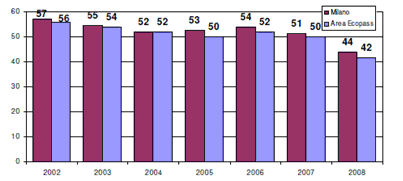
The impact on PM10 annual average concentrations in the air of the Ecopoass area can be seen in the graph below (blue with Ecopass, red/purple without Ecopass).
Impact of Milan Ecopass on annual average PM10
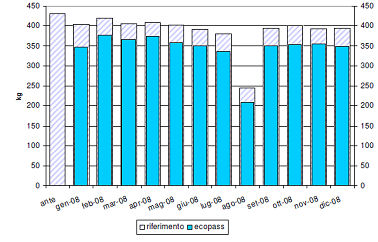
The impact on the annual emissions of nitrogen oxides (NOx) can be seen in the graph below (blue with Ecopass, grey without Ecopass).
Impact of Milan Ecopass on NOx emissions
 
Stockholm Congestion Charge
 
Stockholm first introduced a trial congestion charge, which was determined to be successful. Following the trial the city had a referendum on whether the congestion charge should become permanent. The referendum chose for a congestion charge.
 
The impact of the permanent congestion charge in Stockholm was found to be:
In 2008 the reduction of traffic across the tax cordon was 18%, compared to 2005, before the introduction of the congestion charge, or its trial.
The charge has led to a rapid increase in the number of exempted alternative fuel vehicles in the Stockholm areas. The proportion of trips made by alternative fuel vehicles has increased from 3% during the trial to 13% in 2008.

Estimates are that emissions of CO2 from motor vehicles in the inner city fell by between 14% and 18% as a result of the congestion charge/tax.


Gothenburg

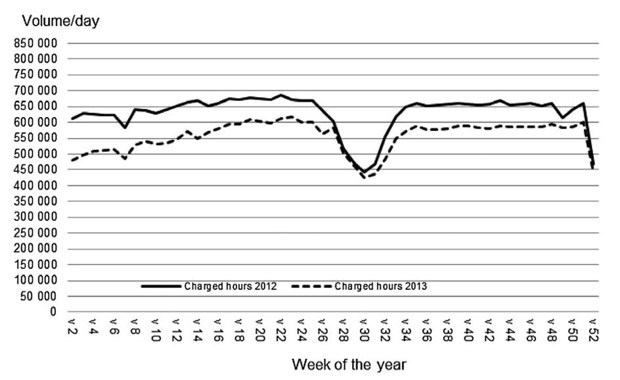
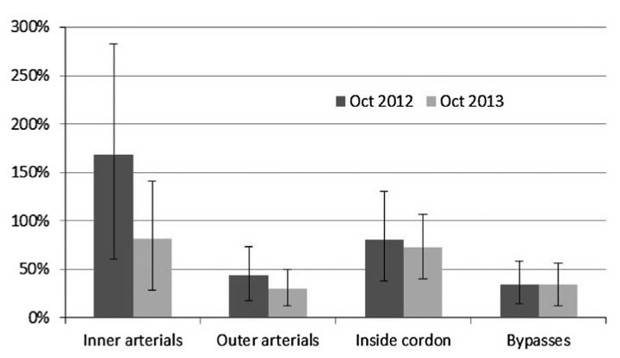
Gothenburg (half a million inhabitants in Sweden) introduced a congestion charge in 2013, and has reduced traffic by around 12% during the week daytime, when the charge is in place.

Impact Gothenburg city road toll congestion tax

Diagram: Weekday traffic volume (6 a.m. to 6:30 p.m.) in the Gothenburg charging zone before and after congestion pricing. (Transportation Research Part A)

Commuters also found their travel times reduced:

Gothenburg city congestion charge commuter travel times reduced

Diagram: Travel time reduction since congestion implementation during weekday morning rush hours in Gothenburg. (Transportation Research Part A)

Find further information on Gothenburg's traffic reduction the citylab website, or from the scientific paper)

What do I need to do before I enter an urban toll area?

Do I need to register for charging schemes? No, you usually do not have to, but it is often cheaper if you do.

Registering by internet Registering by phone Registering by Mobile phone


In which road toll cities do I have to do what?

In some schemes you have to pay after entering or crossing. For other schemes you receive a bill by post.

The table below sets out the options.

Type of payment

Type of payment/registration

Bill by post if not registered (but cheaper if you register)

All Norwegian schemes

Bill by post if not registered Goteborg, Stockholm and Valetta (Malta),

Either
1) pay when or shortly after you enter or cross, or
2) register for easier payment

Milan Area C, Dartford

London (easier and cheaper)

Pay at entry gates

Durham

For details on how to pay see each city (linked above).

With key Access Regulations you usually need to apply for a permit - if you meet the requirements.

If you don't meet the requirements, then you are not allowed access. 

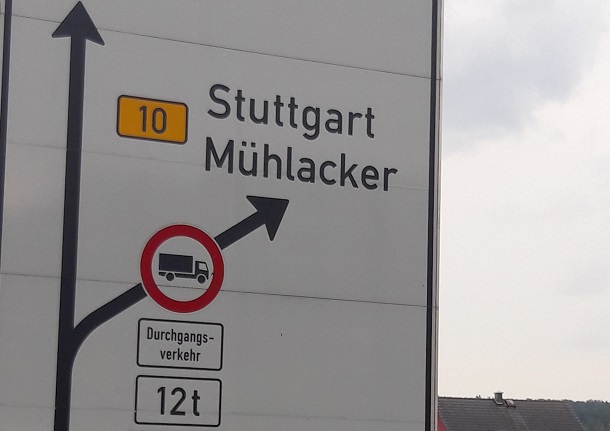
Through traffic road sign LKW fahrverbot 
Registration unsplash photo 

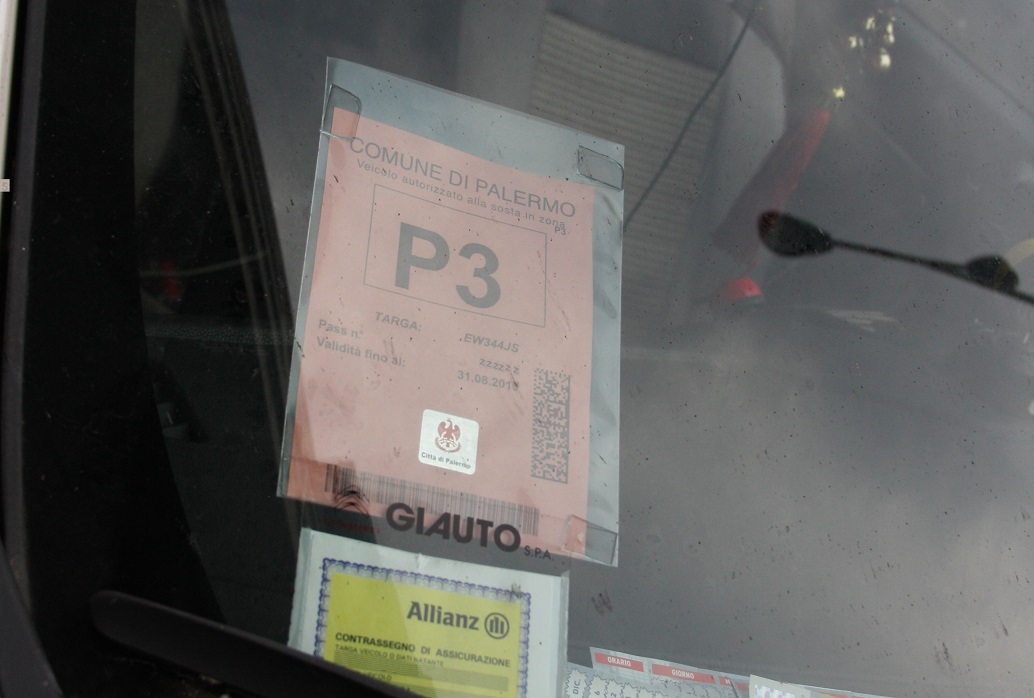
Some access regulation schemes require prior registration for those that are allowed entry, examples include the Italian ZTLs, Prague, Helsinki, Bucarest amongst many others.

Other access regulations are simply indicated by the road signs, which you need to comply with. Examples of these include the access regulations in Bulgaria, heavy duty vehicle transit bans Germany and Latvia.

See the Overview of key Access Regulations for an overview of the registration requirements, or or the individual city page for full details.


Access Regulation with bollards  
Lorry Through Traffic Ban Road Sign
Italian car fee street

This page gives an overview of urban access regulations

Some cities and towns have regulations or restrictions for vehicles other than low emission zones or congestion charges. They might restrict vehicles going into all or part of their area to improve issues such as air quality, noise, congestion, quality of life, increasing cycling or walking or improving how people experience the city, see more below.

What are urban access regulations?

Some cities and towns have regulations or restrictions for vehicles going into all or part of their area to improve issues such as air quality, congestion or how people experience the city, see more below. This can be by for example:

- charging for access to road space (urban road tolls, red dots on our map)

not allowing dirty vehicles to go into the city (low emission zones, green dots on our map)

- only allowing zero emission vehicles entry into an area (zero emission zones, purple dots on our map)

Or other Access Regulation Schemes. These might be:

- having restrictions, or tighter restrictions, including Low Emission Zones, lower speed limits, limited vehicle access, during episodes of high pollution (emergency pollution schemes, orange dots on our map)

- no vehicle access is allowed, with perhaps delivery windows at certain times of the day (pedestrian zones). On our map, these are annotated by blue dots.

- vehicles are only allowed with permits, which are given for certain vehicles or trips (limited traffic zones). On our map, these are annotated by blue dots.

- or by other entry restrictions or access regulations (other access regulation schemes, blue dots on our map). These are often Limited Traffic Zones, lorry through bans, pedestrian zones, superblocks and circulation plans.

 See our blog article about UVARs that also helps explain what they are.

What do we have on our website?

In terms of other access regulations, our website provides all the information you need on the schemes that operate in the larger or more touristy cities. This information will not be comprehensive or cover every urban area. However, we cover as many cities and towns as possible.

We do not generally include pedestrian areas or parking schemes, but we are increasingly working to include the bigger ones. We are complete for the Italian camera enforced ZTLs, but not the non-camera enforced normal ZTLs - as most Italian towns and villages have these.

If you have information on schemes that we do not yet cover, This email address is being protected from spambots. You need JavaScript enabled to view it., and this will help us increase the number of schemes we have on our website.

You can search for cities under the list of Countries, the city search from the top of the page (under the menus), or with the map


Why Access Regulation Schemes?

Many cities and towns struggle with the balance of congestion, ‘liveability’, air pollution, noise levels, accessibility, damage to historic buildings and other pressures of urban life. Many cities have levels of pollution that adversely affect health. Congested, polluted, noisy cities are not attractive for businesses or residents.

Air pollution is responsible for 310 000 premature deaths in Europe each yeari. This is more deaths than caused by road accidentsii. The human health damage from air pollution is estimated to cost the European economy between €427 and €790 billion per yeariii. For more information, see our why low emission zones page.

Congested, polluted, noisy cities are not attractive for businesses or residents. Congestion also has a significant impact on the economy, costing nearly €100 billion, or 1% of the EU's GDP, annuallyvi. The different types of Urban Access Regulations can reduce traffic and congestion in a city, and ensure that those that need to travel with a vehicle - for example deliveries - can travel rather than sitting in a traffic jam.

Traffic incidents caused 39000 fatalities in the EU in 2008. 23% of fatal accidents in built-up areas affected people under the age of 25. Less traffic and well planned streets in urban areas can lead to fewer accidents. vii

Attractiveness to Tourists, those visiting and bringing money into the cities do not want to see traffic jams or rows of tour buses. This is particularly the case for many Italian cities, with Zona a Traffico Limitato (ZTL)

Noise contributes to at least 10 000 cases of premature mortality each yearviii and noise from road and rail traffic is estimated to cost the EU €40 billion per yearix. Almost 90% of the health impact caused by noise exposure is associated with road traffic noisex.


Types of Access Regulation

There are many ways to try to tackle these issues, and regulating the vehicles or trips that access parts of the town is one. The most simple type of Access Regulation is a pedestrian zone, which can very much improve the attractiveness of a tourist attraction or shopping centre. Our website does not generally include pedestrian zones, as they occur in almost every town, and those who need to deliver to the shops have contact with the shops and so know about the scheme. However, some larger pedestrian zones are included under other Access Regulations.

Access regulations can be by vehicle type (eg car or lorry), vehicle weight (eg over 3.5 tonnes), by type of trip (eg delivery), by driver (eg residents or access), or for all vehicles. 

Generally Access Regulations balance the need of vehicles to access an area, with a reduction in the number of vehicles entering the area. For example, encourages commuters to travel by public transport, cycle or foot.

If you are driving a heavy duty vehicle, you will be aware that you are often not allowed to drive through many cities, towns or villages, and the major roads around the towns should be used with preference.

Milan
Paris
Brussels
Amsterdam
SUBSCRIBE TO OUR NEWSLETTER
Subscribe to newsletter